- Blueprint Soccer XI
- Posts
- The Arctic Blueprint
The Arctic Blueprint
How FK Bodø/Glimt out-thought Europe’s elite — and why their mentality matters more than talent

Blueprint Soccer XI
February 24, 2026
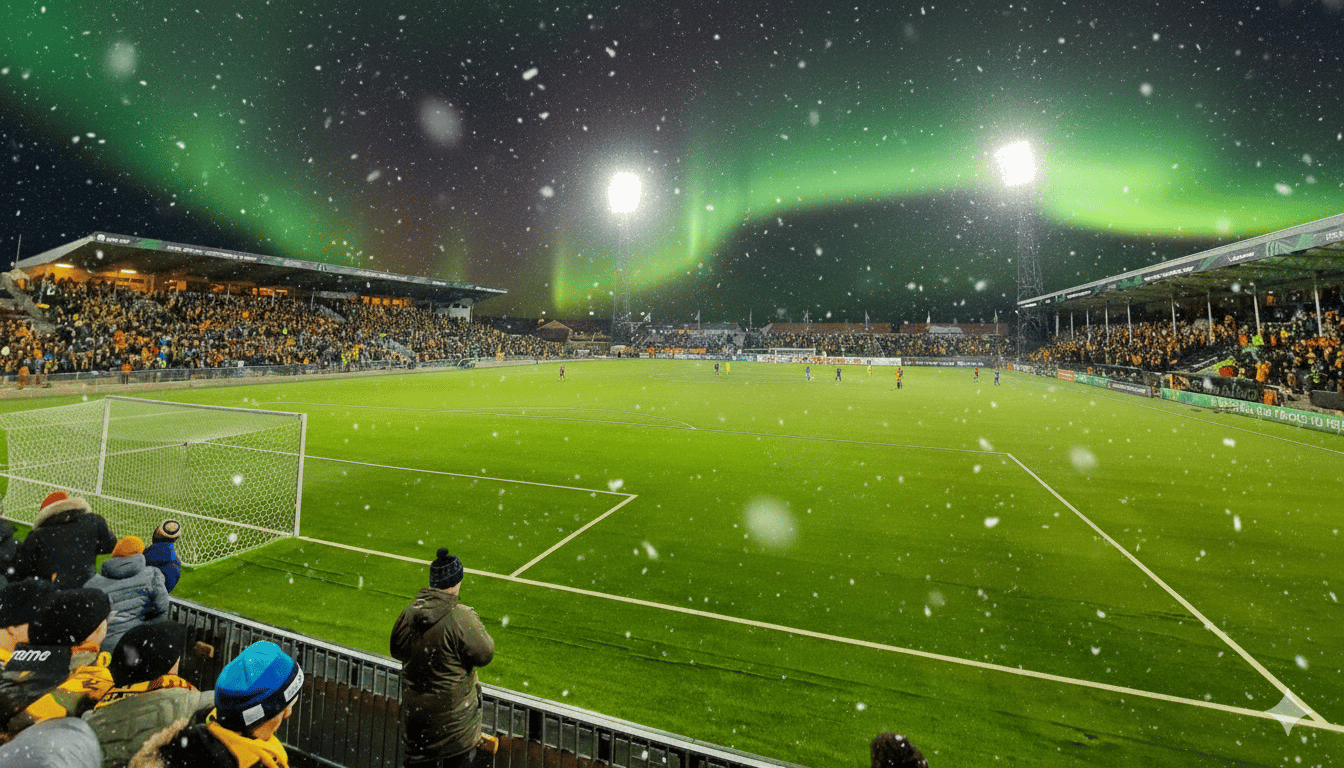
There are moments in European football when the established order is disturbed — not by money, not by star power, not by celebrity managers — but by clarity.
FK Bodø/Glimt’s recent UEFA Champions League results against Manchester City, Atlético Madrid and Inter Milan were not romantic accidents. They were not emotional one-off nights. They were repeatable, structured performances built on principles that have been forged over the last decade in the Arctic Circle.
To understand how Bodø/Glimt beat Manchester City with 34% possession, won away at Atlético Madrid despite being territorially dominated, and then controlled key phases against Inter Milan, you must look beyond the scorelines. The story is statistical. The story is cultural. The story is systemic.
And it begins long before these matches.
From Northern Underdogs to European Disruptors
Founded in 1916 in the small Norwegian city of Bodø, FK Bodø/Glimt long represented northern resilience in a football landscape dominated by southern power centers. For decades, they were competitive but peripheral — respected but not feared.
The transformation began in earnest in the mid-2010s and crystallized under manager Kjetil Knutsen, whose tenure has reshaped the club’s identity from ambitious outsider to tactically sophisticated contender.
Back-to-back domestic titles in 2020 and 2021 were the foundation. Those seasons were not just triumphant — they were revolutionary. Bodø/Glimt scored over 100 league goals in 2020, playing with vertical aggression and positional rotation rarely seen in Scandinavian football.
But domestic dominance is one thing.
Competing with Europe’s elite is another.
And that is where the recent Champions League campaign demands serious analysis.
Manchester City: 34% Possession, 100% Conviction
Against Manchester City, Bodø/Glimt had roughly 34% of the ball. City had nearly twice the possession and yet generated fewer expected goals (approximately 1.17 to Bodø’s 1.68). The match ended 3–1.
That stat alone should stop you.
This wasn’t survival football. It wasn’t a deep block praying for counters. Bodø/Glimt compressed space centrally, forced City wide, and defended the penalty area rather than chasing possession. When they regained the ball, they didn’t reset. They attacked immediately with structure.
Their transitions weren’t hopeful clearances turned into sprints. They were pre-structured patterns: wide player inside shoulder, opposite winger attacking the far post, central midfielder breaking the line late.
They don’t counter by accident.
They counter by design.
Atlético Madrid: Controlled Suffering
Away to Atlético Madrid, possession tilted heavily against them—roughly 65–35. The result tilted the other way: 2–1 to Bodø/Glimt.
This was a different test. Atlético are comfortable without the ball. They understand defensive compactness. They thrive in emotional tension.
Bodø/Glimt did not blink.
Their lines stayed tight—midfield rarely more than 12–15 meters from the back line. Zone 14 was guarded obsessively. When Atlético circulated wide, Bodø allowed it. When the ball moved central, the trap closed.
And when opportunities appeared, they were ruthless.
It’s one thing to endure pressure. It’s another to remain composed enough to execute under it.
That composure is coached.
Inter Milan: Balance, Not Bravado
The first leg against Inter Milan was perhaps the most revealing. Possession was nearly even. Bodø/Glimt didn’t surrender territory the way they did against City or Atlético. Instead, they alternated pressure.
They pressed selectively.
They retreated intelligently.
They attacked with numbers.
The 3–1 scoreline wasn’t built on volume shooting. It was built on shot quality and box occupation. When Bodø attack, they arrive in waves—minimum three runners in the area, often four. They do not admire their passes. They finish their actions.
The most impressive statistic wasn’t their goal tally.
It was how few high-value central chances they conceded.
They defend the space that matters.
The Style: Vertical Intelligence
Bodø/Glimt’s football can be summarized in one phrase: vertical intelligence.
They are not obsessed with possession for possession’s sake. They are obsessed with advantage.
If a forward lane exists, they take it.
If it doesn’t, they stretch width to create one.
If central overload appears, they exploit it immediately.
Fullbacks underlap as often as they overlap. Wingers invert at speed. Midfielders scan before receiving so that the first touch can eliminate pressure rather than absorb it.
And critically: when they attack, they protect themselves.
Their rest-defense shape—usually two defenders plus a screening midfielder—is drilled. They attack with aggression but not recklessness. This is why they concede relatively few transition goals despite committing numbers forward.
That balance is not instinctive.
It is trained.
The Knutsen Effect
Kjetil Knutsen did not import a foreign identity. He refined what Bodø already represented. Knutsen does not look like a revolutionary. He doesn’t posture. He doesn’t perform theatrics on the touchline.
But he is meticulous.
His philosophy is principle-driven rather than formation-driven. He teaches players to understand moments, not just movements. In his model, football breaks down into four phases: attacking, defending, and the two transitions. Each is treated with equal importance.
His coaching ethos centers on:
Principle-based football rather than formation dependency
High-intensity transition moments
Tactical literacy among players
Collective responsibility over individual brilliance
Under Knutsen, players understand spatial logic. They understand rest-defense positioning while attacking. They understand the difference between sterile possession and dangerous possession.
Most importantly, they understand restraint.
The team’s recent European performances show remarkable control of tempo. When leading, they slow. When the opponent destabilizes, they accelerate. When threatened, they narrow. When space opens, they exploit it immediately.
He values collective structure over individual improvisation, but he does not suppress creativity. Instead, he channels it into zones of advantage.
This is coaching architecture.
Why Character Beats Talent
This phrase is often thrown around lazily.
In Bodø’s case, it is quantifiable.
Talent can win moments. Character sustains performance across phases.
Against Manchester City, they did not panic when pinned deep for stretches. Against Atlético, they did not retreat into passivity. Against Inter, they did not chase spectacle.
They remained structurally loyal to themselves.
Character, in footballing terms, means:
Maintaining vertical compactness under pressure.
Trusting triggers rather than emotions.
Choosing discipline over adrenaline.
Recovering shape after missed chances instead of lamenting them.
Talent without emotional regulation fractures in European knockout environments. Bodø/Glimt’s squad may not match their opponents in individual market value, but they outperform them in collective clarity.
That clarity is harder to disrupt than flair.
The City in the Team
There is no accident in how closely the team mirrors its environment.
Bodø is a city that survives long winters. It understands patience. It understands cooperation. It understands preparation.
The club reflects that.
Players who arrive here are not swallowed by celebrity culture. They are absorbed into structure. Training is intense. Roles are clear. Accountability is collective.
There is pride in being underestimated.
And that pride manifests as calm.
The Second Leg in Milan: Precision Required
A 3–1 advantage against Inter Milan is meaningful.
It is not comfortable.
At San Siro, Bodø/Glimt must avoid two traps: emotional retreat and reckless ambition.
They must:
Protect the central channel relentlessly.
Press backward passes to disrupt Inter’s buildup rhythm.
Use controlled possession spells to relieve pressure.
Target space behind wing-backs with early vertical passes.
Maintain rest-defense discipline when attacking.
Most importantly, they must remember what got them here.
They did not outshine Europe’s elite with brilliance alone.
They out-structured them.
The Real Story
Bodø/Glimt’s rise is not a fairy tale.
It is a blueprint.
It is proof that in modern football, synchronization can rival star power. That emotional stability can rival individual genius. That systems built on principles can travel further than systems built on personality.
In the Arctic north, far from the traditional centers of power, a club has demonstrated something deeply important:
When identity is clear, and structure is trusted, talent becomes an amplifier—not a dependency.
And that is why Bodø/Glimt are no longer Europe’s surprise.
They are Europe’s lesson.